We have been examining the beatitudes. In this lesson, we will look at the second one:
Blessed are those who mourn, for they shall be comforted (Matt 5:4)
About This Video
The video version of this study is presented in a format suited to the medium, rather than simply reading the written lesson aloud. It follows the same teaching structure but is adapted for a more conversational, visual style.
You can watch it below or continue reading the full written study.
The first and second beatitude are closely related to each other, and the second builds upon the first. Those who are poor in spirit come to God humbly, recognizing their need for Him. That is the beginning of salvation, and theirs is the kingdom of heaven.
Then Jesus turns to those who mourn. We will see two ways that this verse applies to the believer.
Kingdom truth, as I said in another lesson, is often counter-intuitive. The Greek word translated “blessed” means happy and to be envied. The word “mourn” means to lament or sorrow, particularly over the loss of something that is or was previously important to us.
So, this verse says that a person is truly blessed – happy and to be envied – when experiencing deep sorrow.
How can that be?
Do we have a deep sorrow over the sin in our lives? Over our failings because of our flesh? Or even over the increasing sinfulness we see in our nation?
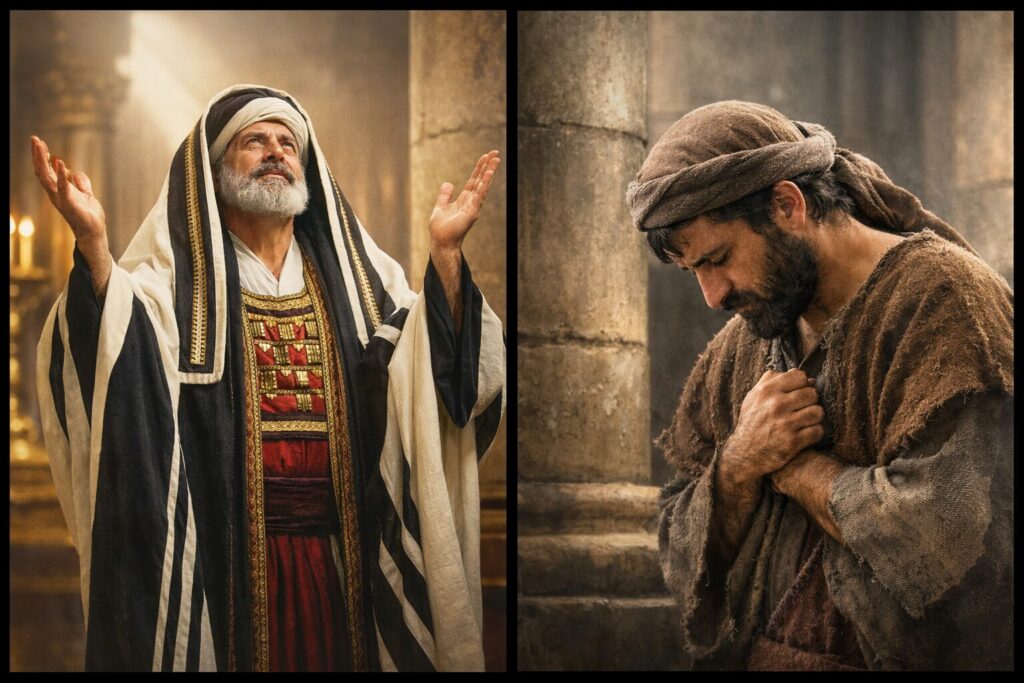
In Luke 18, Jesus tells a story about a Pharisee and a tax collector. The Pharisee refused to be humble and mourn, and thanked God that he was not a sinner like the tax collector. On the other hand, the tax collector cried out, “Be merciful to me, a sinner.” Jesus said it was the tax collector who went home justified before God.
Comfort and Joy
The good news is that God will comfort those who weep and mourn now (Luke 6:21). He will give them laughter.
Jeremiah 31:13, 14 Then shall the virgin rejoice in the dance,
and the young men and old, together;
For I will turn their mourning to joy,
will comfort them and make them rejoice rather than sorrow.
I will satiate (fill to the full) the soul of the priests with abundance,
and My people shall be satisfied with My goodness, says the Lord.
The fruit of the Spirit includes joy. If we first acknowledge and mourn over our sin before God, then seek to walk in obedience to the Spirit, a deeper joy begins to grow in our hearts. Even in the midst of trials and tribulations, His joy will remain (John 15:11).
Romans 8:1 says that there is now no condemnation for those who are in Christ Jesus, for those who strive to walk in the things of the Spirit rather than the things of the fleshly nature. It is a great comfort to know that God is merciful and forgiving when we turn to Him, even when we may still stumble. For our spiritual heart is to learn to follow His ways.
The Second Application
I said there were two ways that this verse can apply to believers, so let’s dive deeper.
We all are born with a sinful flesh nature, and even when we are born again there are certain sins to which our flesh is still drawn. As believers, one of our goals should be to put that sinful nature to death when it rises up, so that we can obtain more of the life of Christ.
But sometimes, putting that thing to death and choosing Christ will cost us in this life. We may have to leave friends behind, may even be rejected by our family, when we choose to follow Christ and seek to honor Him.

Furthermore, we sometimes must get rid of things in our life that can easily lead us astray (Matt 18:8, 9). Things that will drag us back into the world system, back into sin. Things that may pull us away from God. I am speaking of things that are important to us.
It could be a relationship.
It could be a job or career path.
It may even be a favorite activity that is not sinful in itself, but can still keep us from following Christ fully.
For example, I have a friend that loves bowling and at one time considered becoming a professional bowler. But he chose to lay it aside because he knew it would detract from his spiritual walk with Christ.
Getting rid of these things can feel like like cutting off your own hand, or plucking out your eye. It hurts. You will feel the loss. You may even mourn over it. That is a certainty! But it is far better to remove something from your life than to hold on to it and suffer spiritual loss, perhaps even to ending up in hell.
Return to Humility
This brings us back to the first beatitude. We must come to God with humility when we mourn. If we let pride rise up in our flesh, we will resist following God’s Spirit. And a heart of pride and arrogance will cause us to stumble and fall. It can destroy us.
In the previous lesson we saw that Psalm 51:17 says:
A broken and contrite heart – these, O God, You will not despise.
Humility and contrition go hand in hand, as do the first two beatitudes.
We do not mourn as the world mourns, as those who have no hope, for we have a certain hope in Christ. Godly sorrow or mourning produces repentance, resulting in salvation. It produces a change on our part (2Cor 7:10).

We can then cry out in true gratitude, “Abba, Father.” This is an intimate expression that could be understood as “Daddy, Father.” We can come to him like a child climbing into a father’s lap, and be comforted; for if we confess our sin, He is faithful and just to forgive us and to cleanse us from all unrighteousness (1John 1:9)
Final Encouragement
Let me emphasize this again …. God promises that when we mourn our sin and experience loss as a result of following Him, He will comfort us; We will receive a hundred times back from Him, both in this lifetime and in eternity. We will ultimately find out that every sacrifice was worth it when we receive His comfort (Mark 10:30).
——————————————————————————————-
Questions or comments. See below
If you want to keep following the series, you can subscribe on the contact page. We send an email each time a new lesson is uploaded. Your info is NEVER shared.
Portions of this Beatitudes study were previously published on an older blog of mine. I’ve reorganized and expanded the material for greater clarity as part of my new teaching series on The Bible Stop.