Did you know that being good is not the same thing as being righteous?
They seem like the same thing…
but when you look at what Scripture actually says,
you find out they’re not.
So what is real righteousness?
And how does it actually work in our lives?
Come along with me as we take a closer look at the fourth beatitude.
There is a progression in the Beatitudes, as each one builds on the ones that came before.
We have seen that being poor in spirit means coming to God in humility, recognizing our need for Him. This is the beginning of salvation, and is the foundation of the Christian walk. Theirs is the Kingdom of God.
Second, we learned that mourning meant having a deep sorrow over our sins and failings. This goes hand in hand with humility. Scripture says that a humble and contrite heart God will not turn away. God will comfort and strengthen us when we come to Him in honest repentance.
Then, we saw that meekness is the key to long term endurance in the faith. It produces a deep soil in which spiritual growth can take place – a quiet and abiding inner strength to stand for God despite anything Satan’s world system might throw at us.
Together, these form a nutrient-rich soil in which our faith can grow and produce fruit. Matthew 5:6 then says,
“Blessed are those who hunger and thirst for righteousness, for they shall be filled.”
Psalm 37:5, 6 helps us see this connection more clearly.
Commit your way to the Lord, trust also in Him, and He shall bring it to pass. He shall bring forth your righteousness as the light, and your justice as the noonday sun.
When looking at the Greek in this Beatitude, hunger and thirst imply a continual longing or desire. Just as we need to eat and drink regularly to supply our body its needs, so our souls must continually hunger and thirst for righteousness.
Come along with me as we examine how this works – and how God fulfills that desire.
About This Video
The video version of this study is presented in a format suited to the medium, rather than simply reading the written lesson aloud. It follows the same teaching structure but is adapted for a more conversational, visual style.
You can watch it below or continue reading the full written study.
We are all born with a sin nature, often called the flesh in Scripture. When Christ was crucified, that sin nature was crucified with Him on the cross (Romans 6:1-14). But that thing refuses to admit it is dead. And all too often we are drawn to the stench of that old, dead thing, much like children who look at a dead animal and prod it with sticks to examine it.
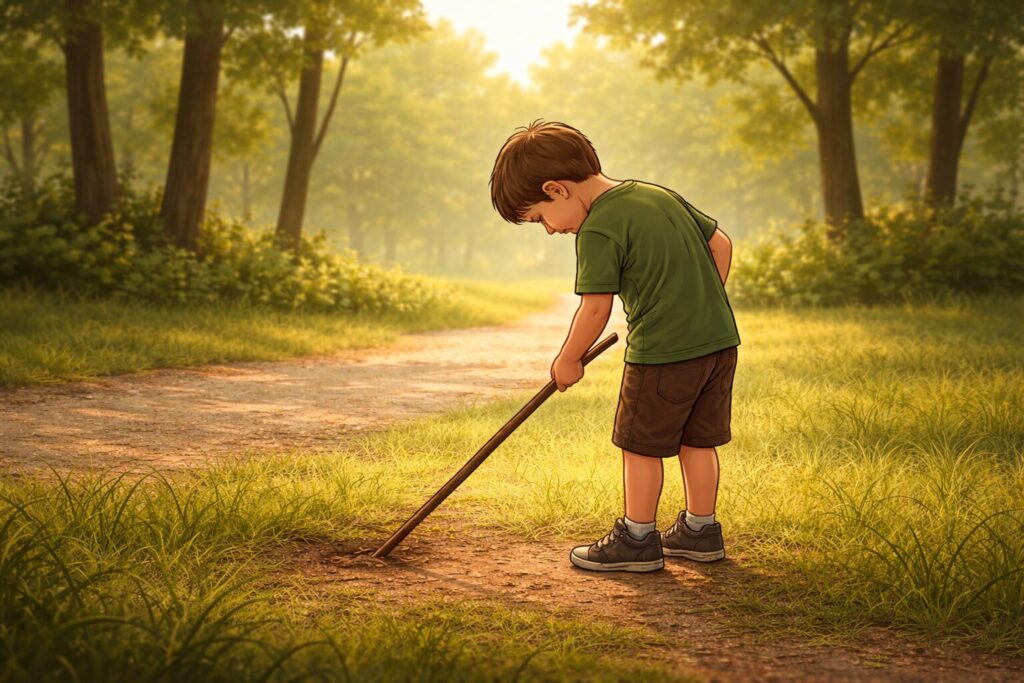
While we are told to consider ourselves dead to sin, in practice, that thing is not quite in the grave yet.
That dead thing is a little like a zombie, dead but not dead. And just as a zombie wants to consume your brains, so this dead thing wants to eat/control your mind (Ephesians 4:17-24). It wants to turn that new man we are becoming back to a sin-filled mindset.
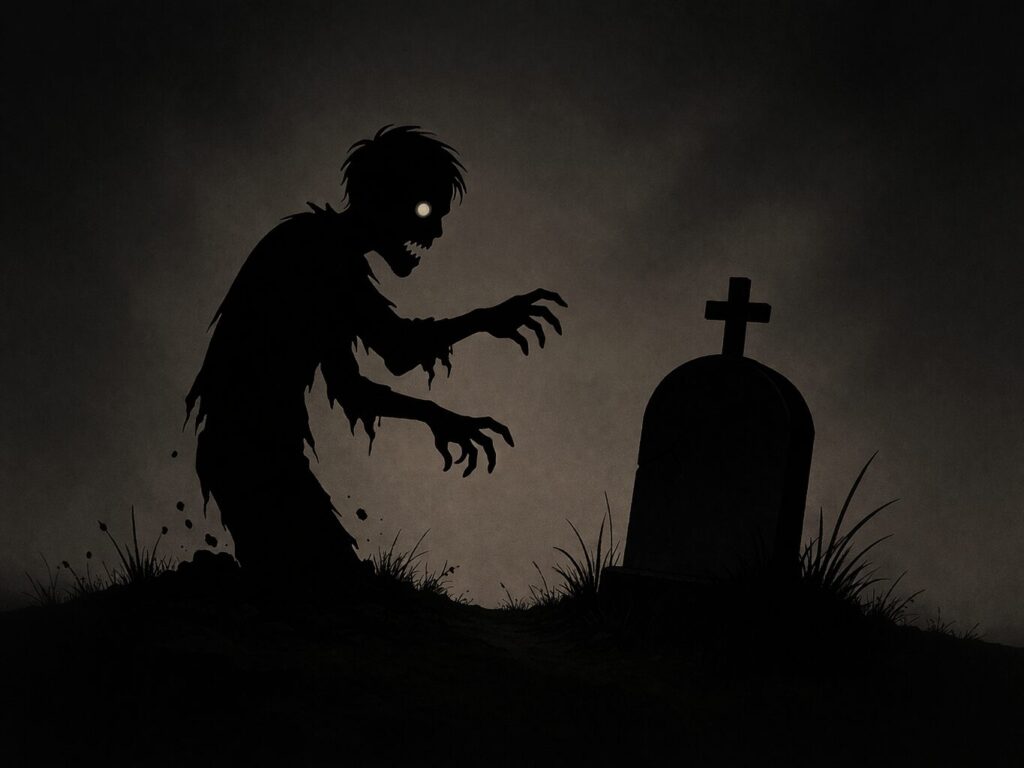
As we progress in the Beatitudes, our desire will be to keep that old nature in the grave where it belongs. The goal is to break that sin-repent-sin-repent cycle – go beyond just acknowledging the truth and standing firm in it (meekness), and begin livinginthe truth. We need to develop a hunger and thirst for true righteousness. It is our part to develop that hunger, and God’s part to bring forth righteousness and fill us. As we position our hearts toward Him, He produces the results.
God has provided everything we need to develop this hunger and to pursue true spiritual growth. We have His Word to battle the lies of the devil, and to choke out his seed/offspring, that sin nature. As believers in Christ, we have the Spirit of God to guide us and strengthen us in our weaknesses. Furthermore, we have been born again as spiritual children of God – we receive a new spirit that is incorruptible.
I started this series by going back to the garden of Eden and the original sin and fall of mankind. Now we must return to that story for greater clarity on spiritual righteousness versus the worldly version.
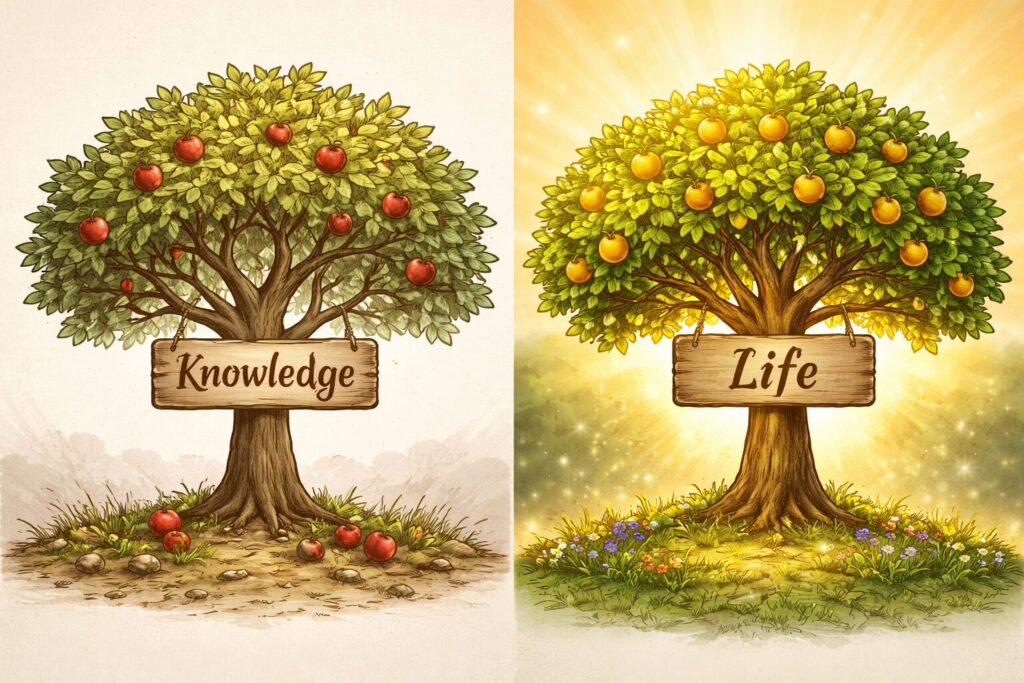
When Adam and Eve were in the garden, there were two special trees there, the Tree of Life and the Tree of Knowledge of Good and Evil. They listened to the serpent and chose to eat from the tree of Knowledge. When God confronted them with their sin, they were kicked out of the garden, and angels were set to guard the way, so that they could not eat from the Tree of Life (Genesis 3). If they had eaten from the Tree of Life after eating from the Tree of Knowledge, mankind would have forever been bound to sin, with no remedy possible – much as Satan does not have the ability to repent. So, getting kicked out of the garden, though counted as a curse, was a blessing of God in disguise.
In a similar fashion, when God commanded the building of the tabernacle, and later the temple, a veil or curtain was placed between the sanctuary and the Holy of Holies. Only the high priest was allowed to enter the Holy of Holies to approach God, and that only at Passover.
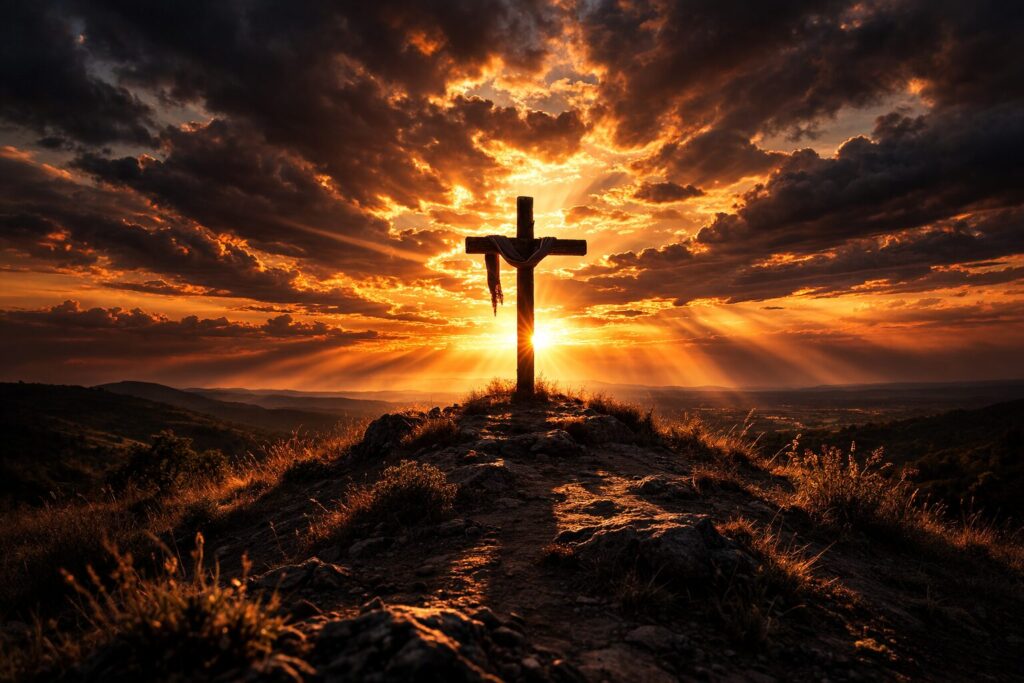
Jesus was crucified in fulfillment of the Passover. He was the perfect sacrifice and true High Priest (See Hebrews). When He died, an earthquake tore the veil to the Holy of Holies. Jesus made a way for us to approach God ourselves, where there was no way. God prophesied His coming in the garden, and here was the fulfillment of the promise.
So, through faith in Christ, the remedy for sin, we now have access to that Tree of Life. His death made the way, not only paying the penalty for our sin but providing the remedy. So we can now choose to eat from that spiritual Tree of Life. And in eternity, overcomers will eat from the actual Tree (Rev 2:7). Many things that have a spiritual significance here on earth are reflections of reality in eternity.
Now we have a choice, if we are believers. We can choose to follow the flesh nature, eat of the Tree of Knowledge of Good and evil. Or, we can choose the Spirit, the Tree of Life. But do not be deceived. Paul warns in Galatians 6:7, 8 (paraphrased):
God is not mocked. He who sows to the flesh will reap destruction, while he who sows to the Spirit will reap life.
The apostle John also warned us in 1John that those who consistently choose sin do not walk in the light, and prove that they don’t really know God. (Just wait until you see how this ties in to the Beatitude on purity of heart, in a future study!)
1John was written not only to admonish us, but to encourage us. His goal was to get us to choose life, so that we “do not sin” (2:1). And if and when we stumble, Jesus is our advocate to the Father. If we confess, that is agree with God, about our sin, He is faithful and just to forgive us and cleanse us.
An Obvious Question
The obvious question – How do we choose the Tree of Life?
Jesus Christ is the Way, the Truth, and the Life (John 14:6). He is the payment for sin, and the replacement for our sin. He is Yahweh Tsidkenu, The LORD our Righeousness.
Jesus said in John 5:39, 40:
You search the Scriptures, thinking in them you will find life, and they are that which testify of Me. Yet you refuse to come to Me, that you may have life.
The answer: We choose life by going to God for His wisdom, by going to Christ for His strength and life. Don’t try to obtain righteousness simply through your own human willpower. While we are to pursue righteousness, to hunger for it – God Himself produces the true righteousness within us.
You may successfully stop a bad habit or specific sin by your own strength, it’s true. You can stop smoking for health reasons, and by sheer effort quit. You may quit chasing the opposite sex because you are married. And these things are certainly good.
But I want you to notice something most people miss. The Tree of Knowledge was the knowledge of both Good and Evil. People have a conscience. While they often don’t follow it, they have some recognition of right and wrong. And when they choose to do right, it is often centered on self rather than simply because it is right. They choose the good of the tree, but it is still the same tree. Think about it.
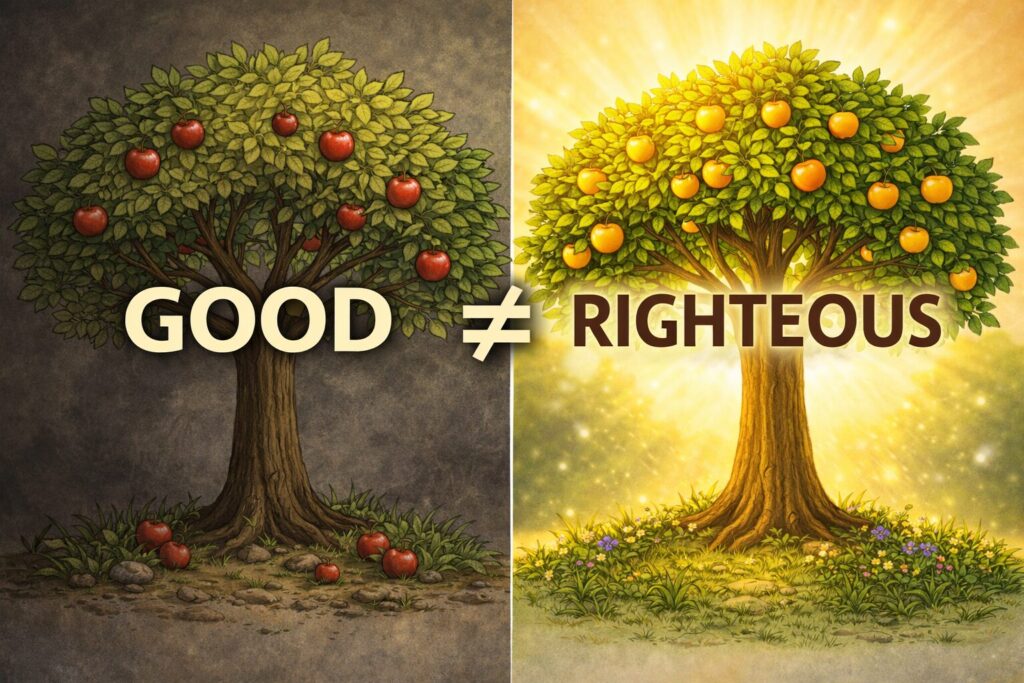
There are plenty of “good” people who are still going to the Lake of Fire, because even the best of them still have sin. And the good that they have is still tied to that same tree that produces evil. Nobody is without sin, and anyone who thinks they are make God out to be a liar – and the truth is not in them (1John 1:8, 10).
True righteousness is not just a matter of not doing certain things anymore. It is not, per se, about stopping sinning (though that is part of it). It is ultimately about going to Christ, about abiding in Christ and walking after the Spirit of God.
It is about hungering and thirsting for righteousness. It is a desire to live right simply because it is right and we want to honor God in our life. Scripture says that whatever is not of faith is sin (Romans 14:23). True righteousness comes through faith (Philippians 3:9). We commit or pledge our path to follow God, and then He will bring forth true righteousness in us.
When we choose obedience to God’s way – to God’s plan – then we are choosing life. When we stand on God’s Word as Jesus did in the wilderness (Matthew 4), and submit ourselves to God, then the devil will flee because we chose life rather than Satan’s favorite tree.
As we put this into practice, we will become righteous, even as Jesus is righteous (1John 3:7). Christ was of completely righteous character, and if we thirst for and pursue righteousness, our character will also become righteous.
A word of caution: When we begin to grow in righteousness, it is easy to start judging and condemning those who are not. In the next lesson, we will consider the extreme importance of mercy.
Here is an design I made based on this lesson, available in shirts and more. You can check it out by clicking on the image.

So, true righteousness is what God works in us as we continue our life in the Beatitudes.