When Jesus said, “Blessed are the peacemakers…” (Matt 5:9), do you know what He really meant by that? While many believers have some idea what this means, most do not fully understand the depths of this beatitude.
We have been examining the beatitudes, and learning how they show a progression toward spiritual maturity. Each one builds upon the previous one.
When we understand humility and repentance, we begin to understand how much we need the mercy of God. This should result in a desire to pursue righteousness, and develop meekness – the quiet strength that produces an enduring faith. Then, when we really begin to understand God’s mercy, we will begin to grow in a merciful attitude toward others who are equally in need of it.
As we pursue the Kingdom of God – submission to God as our King – He will begin to create in us a clean heart, a pure heart, and we will come to know Him in a greater way.
Video Version of This Study
This is the video presentation of the lesson below, formatted for teaching on YouTube. The written study continues underneath for those who prefer to read or study at their own pace.
That brings us to Matthew 5:9, which says:
“Blessed are the peacemakers, for they shall be called sons of God.”
First notice … the peacemaker is the one who is called a son of God in truth. This declaration is not given to the humble, to the repentant, or to the merciful, though they are also children of God. But when they have grown into some maturity, from a spiritual baby to a young adult, and have gained some strength, they learn what it is to be a peacemaker.
A peacemaker is someone who goes forth to spread the Gospel, the good news of Christ. Not simply with the excitement of a new believer, but with the knowledge of a maturing faith. They have started walking out the beatitudes and learning what salvation really means. They have the peace that passes understanding, and they want other to come into that peace, as well.
As the only begotten Son of God, Jesus was a peacemaker, so He is our primary example to understand what this is.
First, it must be noted that Jesus never compromised on God’s Truth. He continually stood for righteousness, meekness, and so forth. He lived out the beatitudes as he walked on earth as one of us.
Some think being a peacemaker means essentially being a doormat to be walked all over. They think it means not addressing sin. But look at Jesus:
He frequently addressed and confronted the self—righteous spiritual leaders of His era, calling them hypocrites who lay rules on others but are rotten to the core. He also addressed sin in general and called on people to repent.
At the same time, though, He showed mercy toward those who acknowledged their sin and their need. He exhorted them to stop sinning, but not with a condemning attitude. He warned them of a very real hell for the unsaved … but then promised eternal life in God’s loving presence if they sought righteousness.
Whether confronting and rebuking the hard-hearted or exhorting the sinner, His motive was always to bring them into right standing with God. To bring them to have peace with God. That is what it means to be a peacemaker.
Another aspect of this is not deliberately setting out to offend others. Preach the truth, but in love, not condemnation. The bible says that as much as it depends on us, we should live peaceably with others. Not by compromising the faith, but by not setting out to deliberately create chaos.
A few years ago, a church leader was drawing images of Mohamed with the stated intent of deliberately offending the Muslims, simply because in America he could freely do this. That is NOT being a peacemaker. It does not edify, nor does it express God’s love even to reach the Muslim and draw them. This behavior will never move them to reject their false religion and choose Christ.
The offense of the cross – and the offense of living right before God in the world – is the only offense we should present to the world.
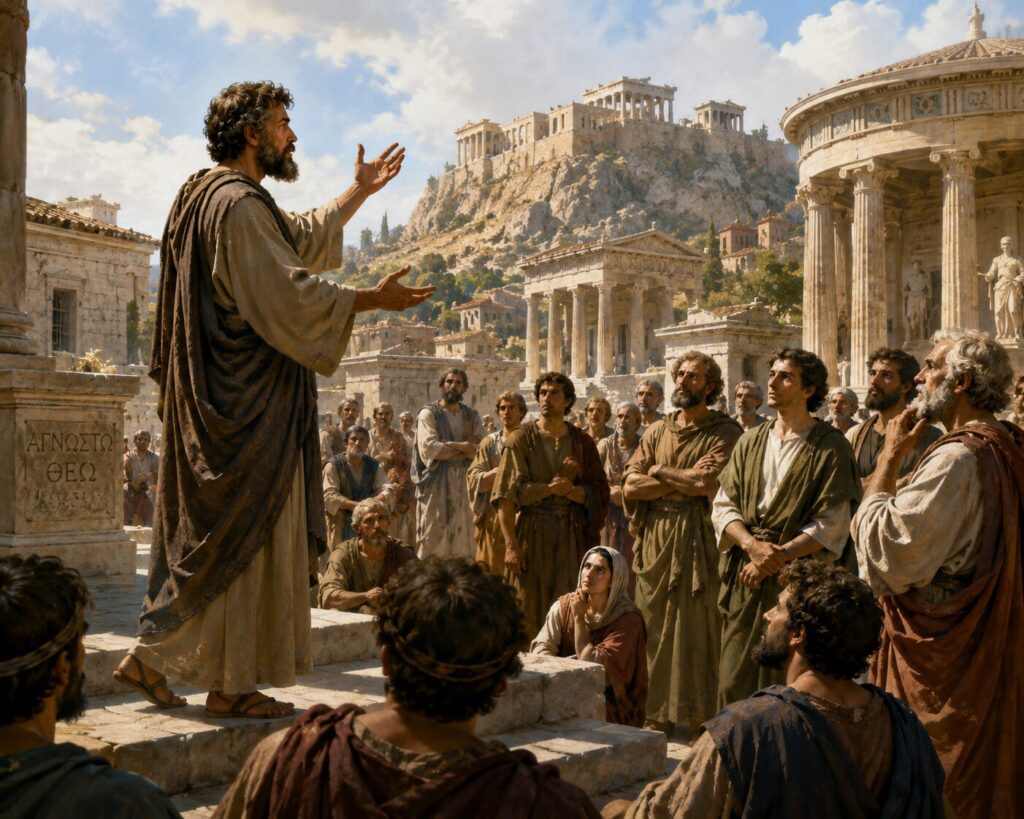
We should consider the Apostle Paul’s ministry as an example. He went to Athens (Acts 17), noticed that they were a very religious city, and even had a statue to the unknown God for visitors to the city. He did not go in denouncing them. He did not mock the false, pagan beliefs. Rather, he used that statue as a starting point to tell them about the God they did not know. He used it to preach Jesus … and many were drawn to the faith and he gained permission to keep preaching in that city.
In another city (Acts 19), many were involved in the occult and witchcraft. When Paul preached there, many also repented and even burnt their books and scrolls on magic. This offended those who would not believe and repent. But it was righteousness and the cross that offended them – not Paul directly attacking and mocking them. Paul was kicked out of that city. But those who had repented remained, and continued to preach repentance.
So, as you can see, being a peacemaker does not mean we don’t openly stand for the Truth. It does not mean we never confront people with the truth. It does mean, however, that our motive is not to offend but to lead them to faith in Christ through love.
Now let’s look at this from another angle. The night before He was crucified, Jesus was talking with His disciples, giving them some final teaching. In John 14:12, He made a remarkable, and oft misunderstood, statement.
Jesus said, “Truly, truly, I say to you, whoever believes in Me will also do the works that I do; and greater works than these will he do, because I am going tot the Father.”
At first glance, this verse can be confusing. How can anyone do greater works than Jesus? He healed the sick, cast out demons, walked on water, and raised the dead. He even arose from the dead, Himself. What could possibly be greater than that?
The answer is revealed when we understand that the purpose of His coming was not to heal the sick, but to restore “the lost sheep of the house of Israel.” His real work was to bring them to repentance and true belief in God, as well as to prepare the foundation of the gospel.
During His earthly ministry, His work was primarily centered in Israel and to the Jewish people.
But after His death and resurrection, something changed. The way was opened to the Gentiles, the non-Jew.
The disciples were sent out with a new command:
“You will be My witnesses in Jerusalem, and in all Judea and Samaria – and to the ends of the earth.”
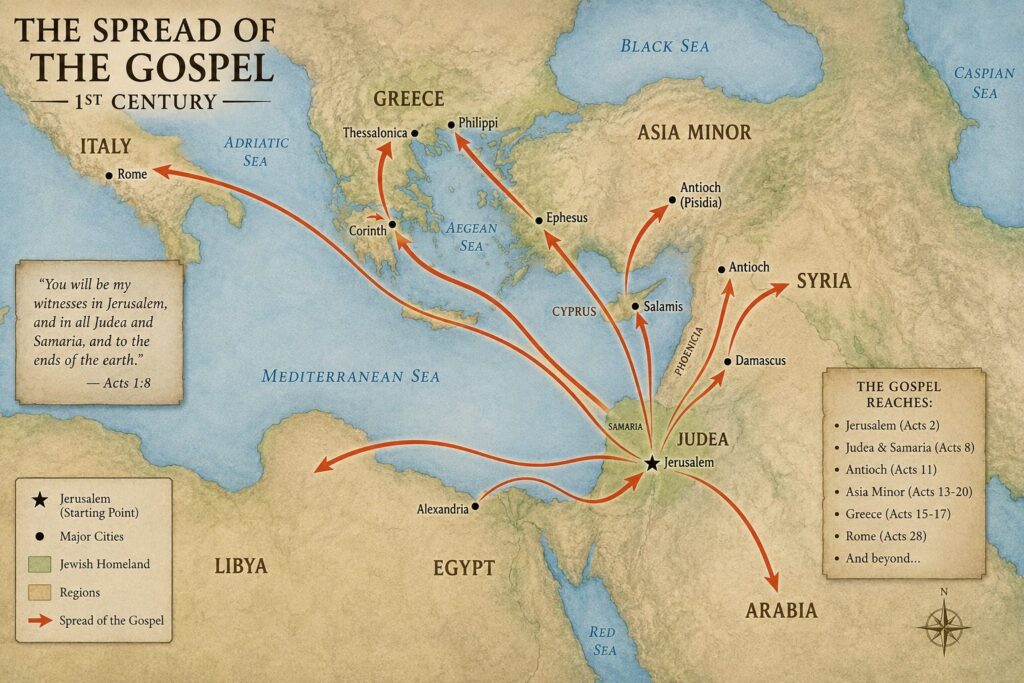
This is where the greater works comes in. It was not greater power, nor some outward miracle more marvelous than raising the dead. No one surpasses Christ. Rather, it was greater in scope and reach, extending from Israel and the Jews to all mankind.
Now the message of reconciliation with God would spread to the entire world. Jesus first taught the disciples how to live out the beatitudes and serve God, then sent them into the world as peacemakers. “We are ambassadors for Christ, as though God where making His appeal through us.”
“This is the work of God, to believe on Him who God sent.” (John 6:9) The greater works than Jesus did is that we are sent to the whole world to bring people to Him. To be peacemakers.
I want to give a quick shout out to Matt Mason, with the Lion of Fire Ministries channel. His presentation of the greater works helped make my lesson stronger. https://www.youtube.com/watch?v=CYOgn9yJmW0&t
We like to throw around that phrase, “I am a child of God.” And when we are saved, we are adopted into the family of God, and are His little children. But who does God declare to be His child?
The one who is learning to become the kind of person described in the beatitudes – humble, merciful, meek but strong in standing for truth. Those who pursue righteousness so God can do a purifying work in them. And they are peacemakers.
They are called “sons of God.”
Check out this design, inspired by this verse. Click the image to go to the website. Available in a variety of products from shirts to pillows to desk mats, and more.